
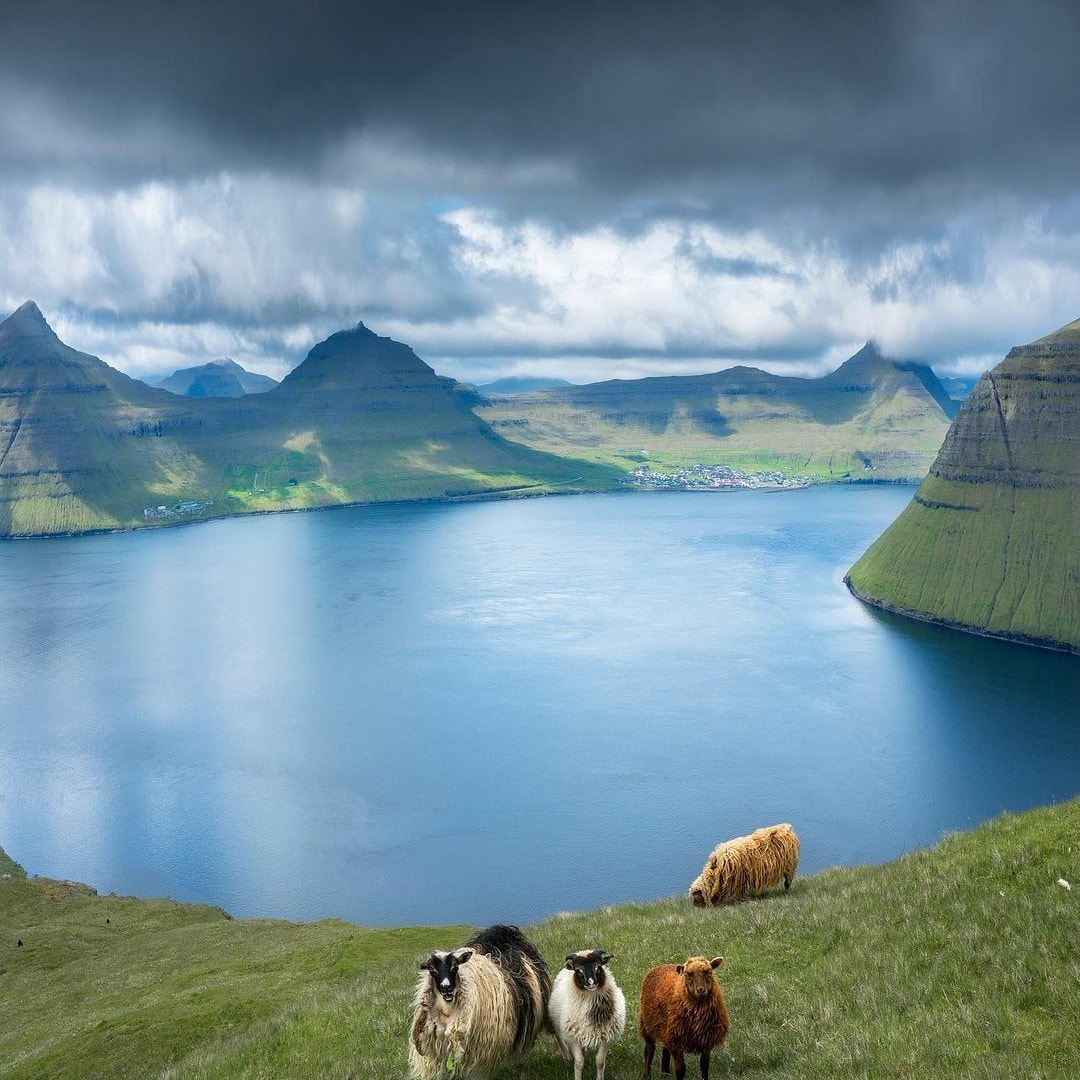
The Faroese sheep
Føroyar is usually read as "the islands of sheep", and the animal has shaped almost everything you walk through here. The Faroese sheep is small, hardy and astonishingly sure-footed, left out on the open mountain all year and gathered by the village in autumn. Every green slope you cross has been cropped short by them for a thousand years; the narrow terraces contouring a hillside are not geology but sheep paths, walked into the mountain generation after generation. The trails on this platform mostly follow them.
Where to find it
The outfield — the unfenced common mountain above the village. Each area of outfield carries a fixed, legally defined number of animals, unchanged for centuries.
Best season
Lambing in April and May, wool plucked or shorn in early summer, and the autumn round-up when the whole village walks the mountain together to bring the flock down.
Walking with respect
The flock is private property on private land. Walk quietly, close every gate behind you, never let a dog off the lead, and give ewes with lambs a wide berth in spring. Your host will tell you where the animals are that day.
Good to know
- The right to graze the outfield is measured in mørk, an old land unit still used in law today.
- Faroese wool was once the country's main export — the old saying is "wool is Faroese gold".
- The sheep are why the islands have almost no trees: seedlings are grazed off before they establish.
- A ewe knows her own patch of mountain and will return to it her whole life.