
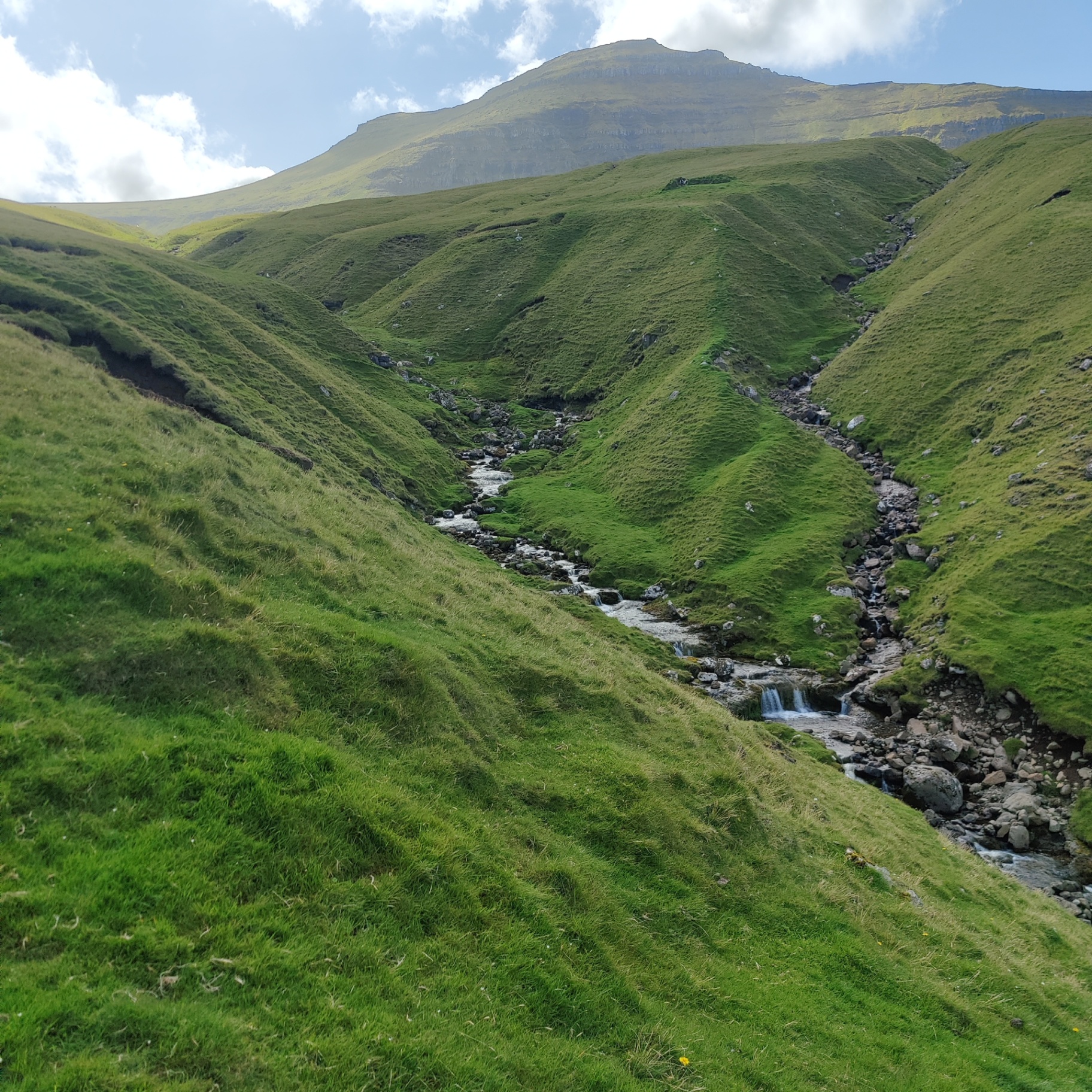
Waterfalls
There is almost nowhere in the Faroe Islands out of earshot of running water. Rain falls somewhere on around 260 days a year, the rock underneath is hard basalt that holds very little of it, and the distance from summit to sea is short and steep. The result is a landscape stitched with waterfalls — some named and famous, most nameless, and a few that blow back upwards when the wind comes hard off the Atlantic.
Where to find it
Hanging valleys, sea cliffs and every steep mountainside after rain. The largest are fed by mountain lakes; the smallest appear within an hour of a shower and are gone by evening.
Best season
Strongest from October to April. Summer waterfalls are gentler but the light is far better — and the paths beside them are safer to walk.
Walking with respect
Waterfall edges erode quickly under footfall. Stay on the path, never climb below an overhang after heavy rain, and treat a swollen stream crossing as a reason to turn back.
Good to know
- In a strong southerly gale, water leaving a cliff edge can be lifted back over the top as spray.
- Rock ledges beside a fall grow the richest plant life on the island — the sheep cannot reach them.
- Wet basalt is far more slippery than it looks; keep to the marked line of the path.