
Seabirds
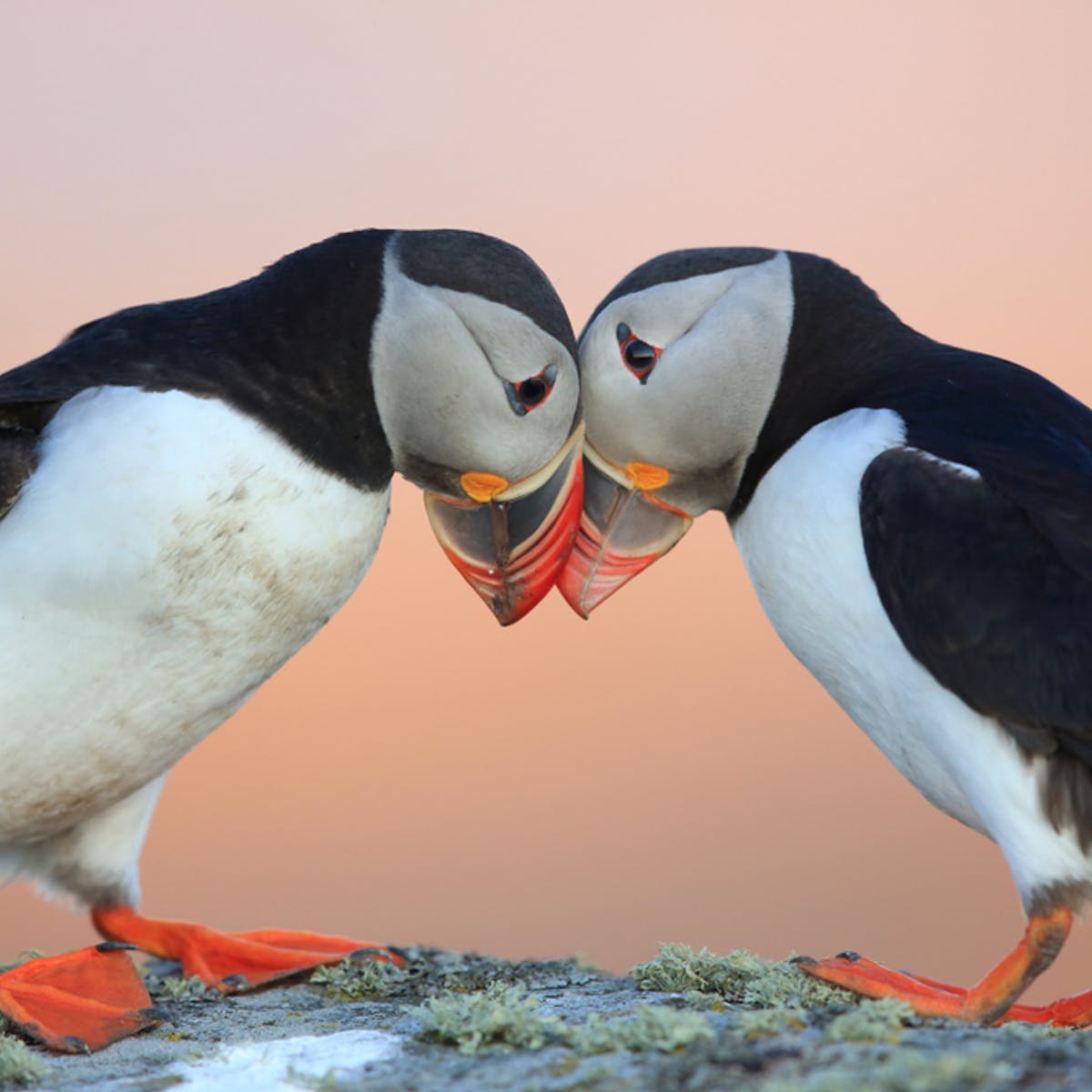
More seabirds breed in the Faroe Islands than people live in all of Scandinavia's smaller capitals combined. From late spring the cliff walls turn into vertical cities: Atlantic puffins burrowing into the grass crown, common guillemots packed shoulder to shoulder on bare ledges, fulmars riding the updraught without a single wingbeat, and kittiwakes filling the whole bay with their name. Walking a coastal trail in June, you rarely see the birds first — you hear them.
Where to find it
Grass-crowned sea cliffs, offshore stacks and steep coastal slopes. Puffins need soft turf at the cliff top for their burrows, which is why the best colonies sit exactly where sheep grazing keeps the grass short.
Best season
Mid-April to mid-August. Puffins arrive in April, chicks fledge through August, and by September the cliffs fall silent. Fulmars are the exception — they can be seen along the coast almost year round.
Walking with respect
Puffin and guillemot numbers have fallen sharply as warming seas push sand eels away from the colonies. Keep well back from the cliff crown — puffin burrows collapse under a single footstep — stay on marked paths, and never let a dog near a colony in the breeding season.
Good to know
- A puffin can carry more than a dozen sand eels crosswise in its beak at once.
- Guillemot eggs are sharply pointed so they roll in a circle instead of off the ledge.
- Fulmars defend the nest by spitting a stomach oil that ruins a predator's feathers.
- The Faroese fowling tradition of sig — descending the cliff on a rope — is centuries old and now strictly limited.